Policy Changes
One concrete change that could reduce negative effects of toxic masculinity is changing parental leave policies to allow fathers to be more involved.
Currently, the USA is one of only a few countries that does not federally mandate paid parental leave (source). This typically results in fathers returning to work immediately after a baby is born, while the mother stays home, since the couple can not afford to have zero income.
Many countries only offer paid maternal leave, which is good progress, but still prevents fathers from being able to be involved with raising his newborn. Other countries offer much more paid leave for mothers than for fathers, such as Saudi Arabia, which offers 10 weeks for mothers and only 3 days for fathers (source).
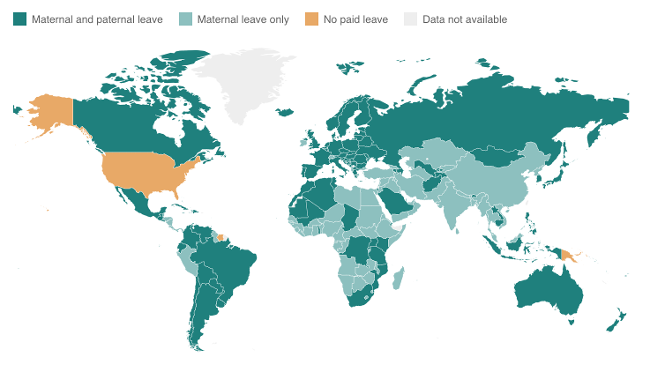
(source)
While almost all countries could stand to improve their paid maternal and paternal leave laws, the United States has the farthest way to go. Increasing paid paternal leave could benefit both fathers and sons. The stereotype that mothers are better nurturers and more involved in their children's lives stems from the fact that fathers were not financially able to take the time to bond with their child (source).
Increasing paid paternal leave would allow fathers to become better fathers and feel more valued in their family. It would also allow sons to feel more connected to their fathers since their father would be more available, both physically and hopefully psychologically.
Another concrete change would be improving child custody laws to make fathers feel more valued.
In families with children, a divorce will result in the children living with the mother 90% of the time (source). In these scenarios, fathers have both lost their partner and the ability to see their children every day.
Over half of non-custodial fathers end up entirely dropping out of the lives of their children. This could potentially be due to the fact that they feel unable to cope with the pain and shame they feel from their divorce and from losing custody (source). While many judges may feel like the mother is more equipped to take care of the child, they are ignoring the system that often prevents fathers from having the time to become a more involved parent.
If paternal leave became more accessible, fathers stand a better chance at remaining involved in their children's lives since the judge would hopefully see how critical the father is to the family. This would improve the wellbeing and mental health of fathers, and perhaps even reduce risk of suicide, since they would only have to deal with the divorce, and not also losing their children (source).